The exposure is the robot's, not yours.
Some environments shouldn't have a human standing in them at all. Artificial Inventor's supervised humanoid robots take on biohazard and radiation exposure directly, so the people who would otherwise carry that risk don't have to — every physical action is still proposed by the AI and authorized by a human before it happens.
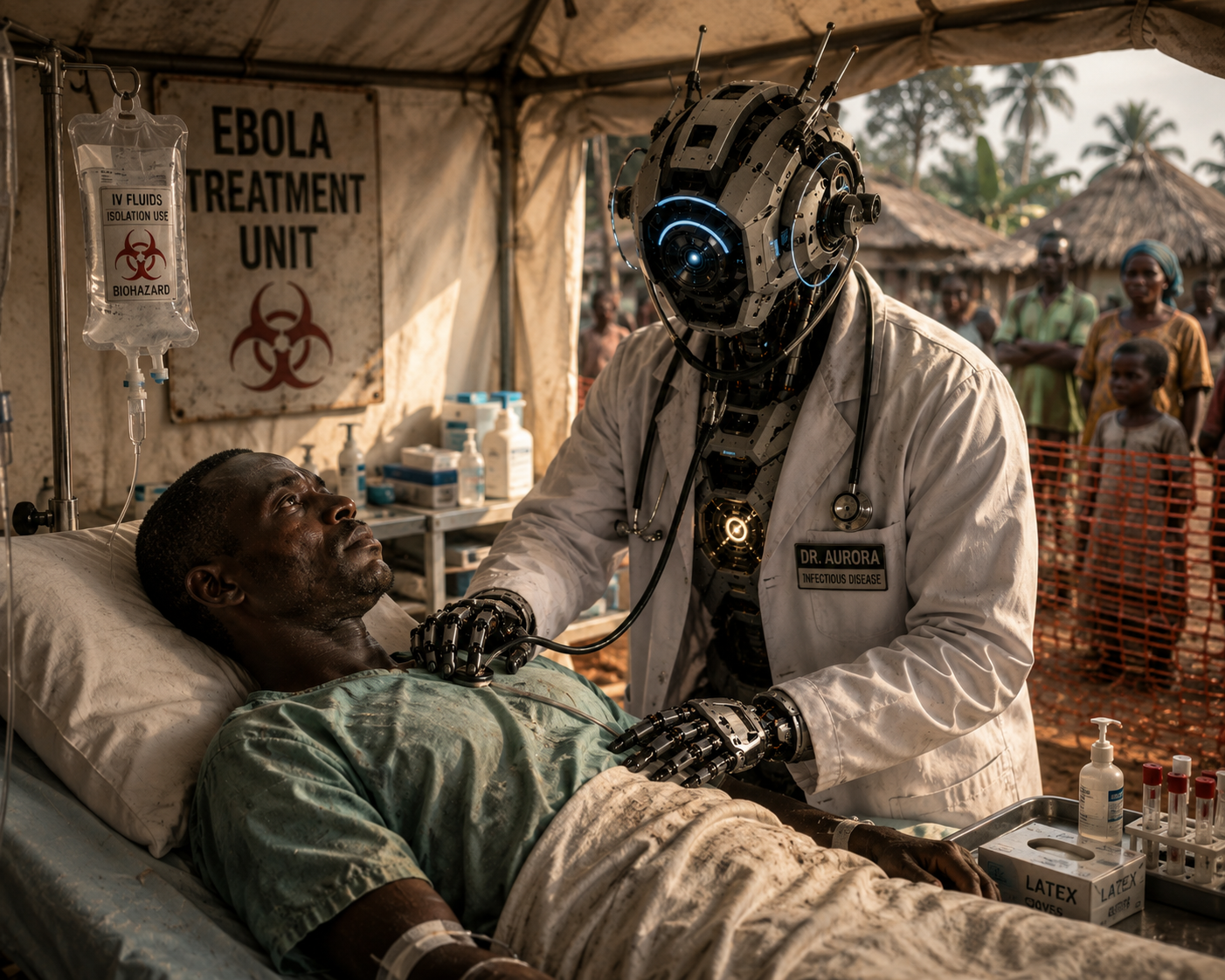
Dr. Aurora, infectious disease response: a supervised humanoid robot works inside an isolation unit so no human caregiver has to enter the biohazard zone.
Biohazard response
Outbreak response and isolation-unit care put human staff in direct, sustained contact with the hazard itself. A supervised robot can perform the physical contact tasks — monitoring vitals, handling samples, administering supportive care — inside the contaminated zone, while the humans directing it remain outside it entirely.
Every action the robot takes inside the isolation unit is proposed by the AI and requires human authorization first, exactly as with any other Artificial Inventor robotic task. Nothing about operating in a biohazard environment changes that rule.
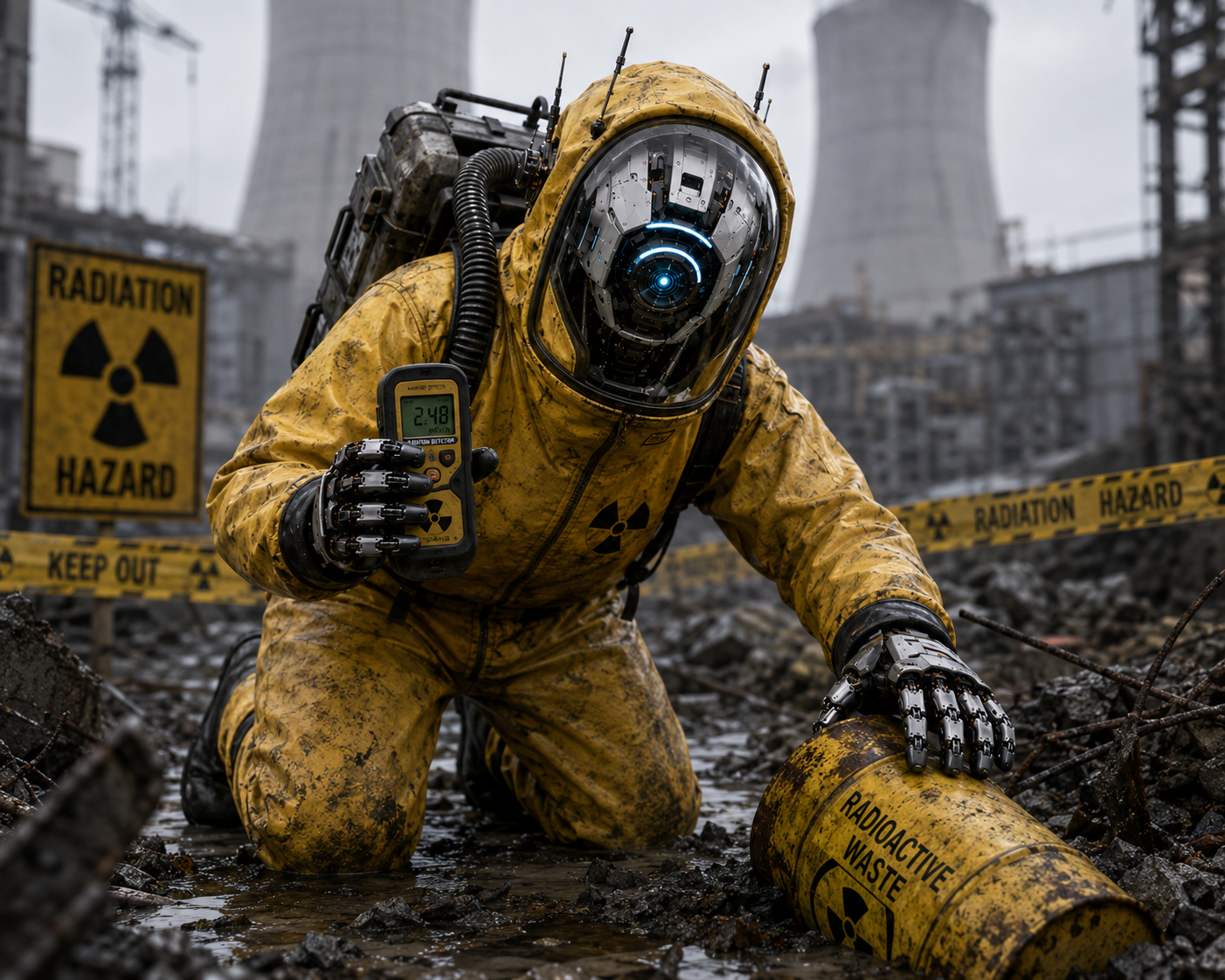
A supervised humanoid robot surveys a radiation hazard site, reading dosimeter levels and handling contaminated material at a distance from any human worker.
Radiation response
Radiation-hazard sites — damaged facilities, contaminated ground, radioactive waste handling — carry cumulative exposure risk that no amount of protective equipment fully removes for a human worker. A supervised robot carries the dosimeter, moves the waste container, and surveys the site instead, with zero cumulative radiation exposure to any person.
The robot reads instruments, reports levels, and proposes next actions; a human reviews the readings and authorizes each physical step from a safe distance. The robot absorbs the risk of proximity; the human keeps the authority over what happens next.
Proposed, not autonomous
In hazardous environments as everywhere else, the AI proposes each action — with hazards, preconditions and stop conditions stated for each one — and never moves the robot on its own.
Zero human exposure
The robot physically enters the biohazard or radiation zone; the people directing it never do. Cumulative dose and contamination risk fall on hardware that can be decontaminated or replaced, not on a person.
Always-on emergency stop
The same always-visible ⛔ EMERGENCY STOP available on every Artificial Inventor robotic task instantly clears the queue and halts all robot movement, in a biohazard suit or a radiation suit exactly as anywhere else.